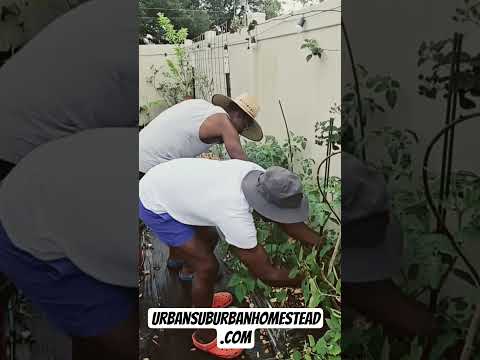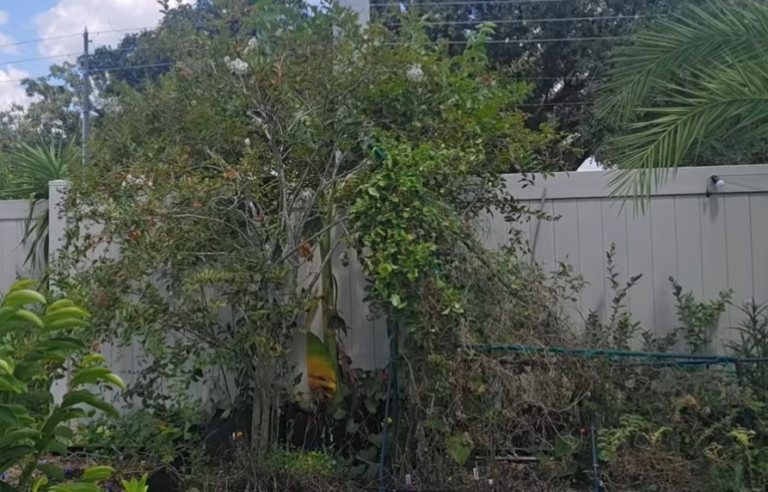
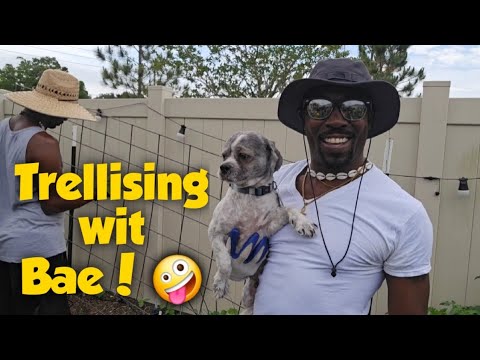
I’ll be honest — trellising day is one of my favorite days in the gar-deen. There’s something deeply satisfying about getting your plants supported and organized, knowing you’ve set them up for success. And this round, I had my bae out there with me, which made the whole thing even better. We knocked out three different garden trellis methods for tomatoes and other climbing crops in one session: the cattle panel, a net trellis, and the Florida weave. Let me walk you through what we did and why.
Why Garden Trellis Methods Matter (More Than You Might Think)
Before I get into the how, let me talk about the why — because some folks skip trellising altogether and then wonder why their plants are struggling.
When you trellis your plants, you’re doing a few important things at once. You’re improving airflow around the leaves, which is huge in Florida’s humid climate because stagnant air is where fungal disease gets started. You’re also keeping fruit off the soil, which reduces rot and pest damage. And you’re making harvest a whole lot easier — there’s nothing fun about digging through a tangled mess of vines looking for hidden tomatoes or cucumbers.
Getting your support structures in place early — ideally at planting time or shortly after — also means you’re not disturbing established roots later trying to pound in stakes. Plan ahead and your plants (and your back) will thank you.
The Cattle Panel Trellis
The cattle panel is probably my favorite investment in the gar-deen so far. These are heavy-duty welded wire panels that are incredibly strong and built to last for years. We bent ours into an arch over one of the raised beds, and it creates this beautiful tunnel structure that vines can climb up and over.
We’re using it for cucumbers and some of our heavier vining crops. The grid spacing is wide enough that fruit can hang through as it develops, and the structure is sturdy enough to handle the weight without bowing.
Setting it up took both of us — these panels are not lightweight — but once it was anchored in place, it felt rock solid. The key is securing both ends well so it doesn’t shift as the weight of the vines increases.
If you’re investing in any one trellis system for your raised beds, this is the one I’d recommend. It’s an upfront cost but it will outlast just about everything else in your garden.
The Net Trellis
For some of the more delicate climbing plants — and for areas where we didn’t need the heavy-duty strength of the cattle panel — we put up a net trellis. This is exactly what it sounds like: a mesh netting strung between two stakes or posts.
The beauty of netting is that the plants can weave themselves through it as they grow. You don’t have to do a lot of training — the tendrils find the mesh and grab on naturally. It’s a great option for beans, peas, and lighter vining plants.
One tip: make sure your posts are in solid and that the netting is pulled taut. Saggy netting ends up being more of a headache than a help — plants get tangled, and you’re constantly trying to untangle them when you harvest.
Florida Weave on the Tomatoes
The Florida weave is a technique I love for indeterminate tomatoes — those are the types that just keep growing and producing all season rather than setting all their fruit at once. It’s the method a lot of Florida farmers use, and once you see it in action, it makes complete sense.
Here’s how it works: you drive sturdy stakes into the ground between every couple of tomato plants. Then you run twine down one side of a row of plants, loop it around each stake, and come back down the other side — creating a kind of sandwich that supports the stems. As the plants grow taller, you add another layer of twine higher up. The plants are supported on both sides and held upright without you having to tie each individual stem.
It’s fast once you get the hang of it, and it’s incredibly effective. The plants stay upright, the airflow stays good, and you can walk through the rows easily to check on things and harvest. For a complete step-by-step breakdown, check out our dedicated Florida Weave Trellis on Tomato Plants post.
Bae was a huge help with this — one of us drove stakes while the other ran the twine. Teamwork in the gar-deen really does make everything go faster and honestly just makes it more fun.
The Bigger Picture
By the end of the day, the gar-deen looked completely transformed. Everything had structure, everything had support, and you could actually see the individual plants clearly instead of a chaotic tangle of green.
Trellising is one of those tasks that feels like extra work upfront but saves you so much time and heartache throughout the season. Fewer disease problems, easier harvests, better yields — it’s all connected. Browse all of our planting and garden structure tips in the Gar-Deen Grow Guide.
And honestly? Doing it with someone you love makes even the hard work feel like a good time.
Quick Tips Recap
- Trellis early — ideally at or right after planting — to avoid disturbing roots later
- Cattle panels are a long-term investment; they’re heavy-duty, durable, and great for arched trellises over raised beds
- Net trellising works great for beans, peas, and lighter vining crops — keep the netting taut
- The Florida weave is ideal for indeterminate tomatoes; add a new layer of twine as plants grow taller
- Good trellising improves airflow, reduces disease, and makes harvesting dramatically easier
Check out the full video above to see all three trellis setups in action — and yes, bae made an appearance! Subscribe to the channel and drop a comment below. What trellis method do you use in your garden?